
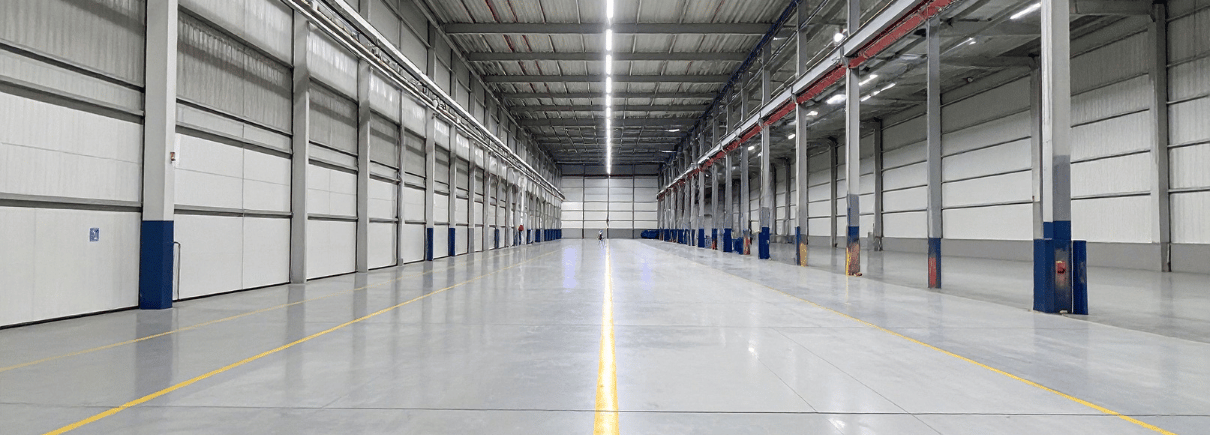
The True Cost of Empty Commercial Property in 2026
From the moment a building falls vacant, the costs of commercial property begin to stack up, often faster than landlords expect. Lost rent is only the start. Business rates, insurance premiums, security spend and deterioration all combine to turn short void periods into expensive holding liabilities.
This cost guide is written for 2026 conditions, when, of course, there seems to be greater pressure on general operating costs, not to mention increased insurer scrutiny and more local authority enforcement. If you’re responsible for an empty commercial property, the following information will show where the real costs sit today. It is intended to be a snapshot of current times and a high-level discussion document. If you need more detailed advice, you can can contact the team at ASTOP, who will be able to give you more tailored information and advice.
Empty Property Costs
There are immediate, unavoidable costs that come with an empty property. Landlords and owners can at least be prepared for the following and look for mitigating strategies. There are other longer-term costs that grow the longer your property isn’t occupied. We have shared them both below.
Empty Property Business Rates
Business rates liability typically reverts to the owner, once temporary empty property business rate relief ends For many, this becomes the single most significant ongoing cost of vacancy, especially in urban locations where rateable values remain high. Rates are payable regardless of whether the unit is marketable, under refurbishment, or awaiting a tenant decision. In 2026, as local authorities struggle to balance the books, rates enforcement and recovery action is typically fast and unforgiving.
Vacant Property Insurance Costs
For vacant properties, insurance premiums tend to rise sharply, while policies are likely to are introduce tighter conditions, exclusions, and higher excesses. Many insurers now require regular documented inspections, upgraded physical security, and strict compliance with vacancy clauses to maintain coverage.
Failure to meet these requirements can invalidate claims. If claims are not paid, insured risks can turn into expensive direct losses. It is wise to view increased insurance costs for an empty property not just in terms of a hike in premiums. You need to include the operational burden required to maintain compliance with your policy, too.
Security Costs For Empty Buildings
An empty building demands active management. Typical security costs for empty buildings include alarms, temporary boarding, CCTV, lighting, patrols, lock changes, and emergency call-outs. The list goes on. Alongside external products and services, the hidden cost of professional time quickly adds up. With an empty property, you may spend hours of your own time arranging inspections, logging visits, responding to minor incidents and dealing with neighbours or authorities. These costs rarely appear in spreadsheets, but they materially increase the holding costs of vacant property.

Damage That Grows Quietly
Vacant buildings deteriorate faster than occupied ones. Small issues, such as leaking pipes, blocked guttering, and roof defects, can go unnoticed for weeks with nobody actively using your space. This can lead to damp, mould, timber decay or electrical damage. Pests and vermin are more likely to establish themselves in unused spaces. Paying for these additional dilapidation risks can erode the value of any new tenancy.
Legal Liability & Enforcement Risk
There’s no hiding from the law. You retain legal responsibility for an empty property. Any fault or misadventure related to your vacant unit can trigger a claims. Nuisance complaints and local authority action can prove costly too. In some cases, councils may step in to carry out works and recover costs if a property is deemed dangerous or detrimental to the area. These risks and potential associated costs increase the longer a building remains empty.
Reputation & Value Drag
Visible vacancy has a real impact on you brand reuptation, and how your business is viewed. For investors, prolonged void periods can weaken your position. In competitive markets, reputation and momentum matter. Vacancy quietly undermines both.

Charity Leasing: A Proven Way To Reduce The Costs Of An Empty Unit
One proven way to reduce the costs associated with an empty commercial building is seeking a short-term lease with a charity, good cause or local community group. An interim occupier, even for a short period, can take on business rate liabilities, in full or in part. A charity will benefit from generous relief, too. Insurance providers look at a responsible tenant as a stabilising factor, and visible tenants in your property every day brings countless security and maintenance benefits.
Our simple comparison table draws out the benefits of leasing your empty property to a charity or good cause.
| Cost | Vacant | Charity-Occupied |
|---|---|---|
| Business Rates | Payable after relief period | Often reduced or mitigated |
| Insurance | Higher premiums, strict conditions | More stable risk profile |
| Security | Patrols, CCTV, boarding | Reduced due to daily presence |
| Maintenance | Reactive & delayed | Issues identified early |
| Management Time | High | Lower, more predictable |
This comparison is designed to help decision-makers see that occupancy by a charity, good cause or community group changes the cost equation, despite a lack of commercial rent.
Why Charity Occupation Changes The Risk Profile
Donating space to a charity and ending a vacant period, albeit temporarily, shifts the risk profile considerably. People using your building every day immediately reduces the risk of crime, unauthorised use or anti-social behaviour. Similarly, charity occupants can act as your eyes and ears. Spotting security weaknesses before they grow intobigger risks. The same is true of maintenance problems. Who better to report a ripping tap, for example, than someone using your building? Prompt fixes before issues escalate save money. This is why charity leasing is often supported by insurers. It is likely to lead to lower premiums and less restrictive policy conditions.
Local authorities, under pressure to prevent urban degredation also prefer charity occupancy to vacant properties. Their business rates relief programmes are designed specifically to support good causes and community groups in their regions. If your business depends on goodwill from local government, as is the case with many property and developer businesses, charity leasing is a way to foster good relationships. Of course, there is also a more general CSR, ESG, and social benefit to supporting charities. You can demonstrate responsible stewardship and a commitment to your local area.
How Astop Helps Control Vacant Commercial Property Costs
ASTOP works with landlords, managing agents and asset managers to match empty commercial properties with vetted charities and community groups. We help assess suitability, put short-term agreements in place quickly and keep arrangements flexible.
Our model is designed to reduce vacant commercial property costs, limit risk exposure and support lawful rates mitigation. So, if you’re carrying the cost of an empty commercial unit in 2026, we can assess your property, outline the cost risks, and suggest a low-risk occupation option that protects the building while supporting a good cause in your community.

 Image from Richmond Furniture Scheme