
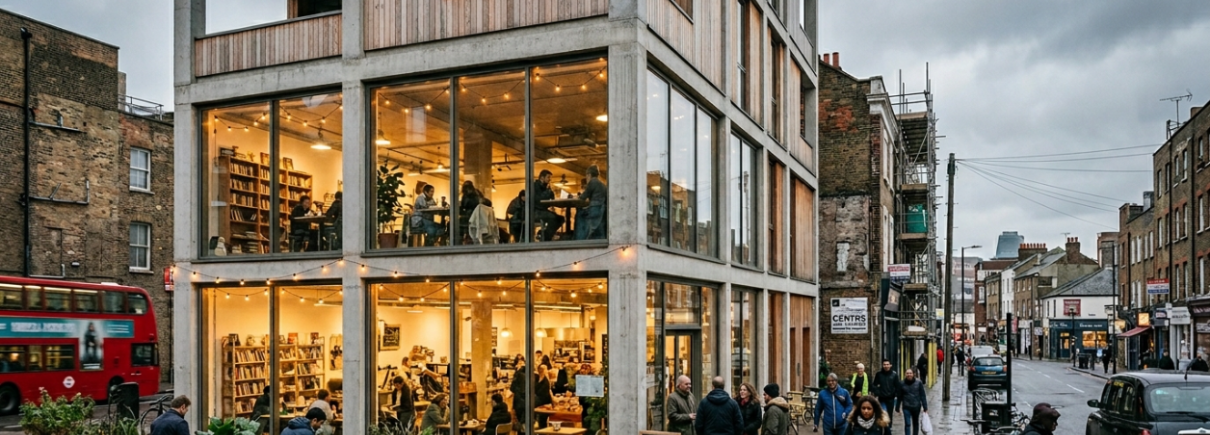
How Temporary Occupation Can Improve Perception Around Stalled Sites
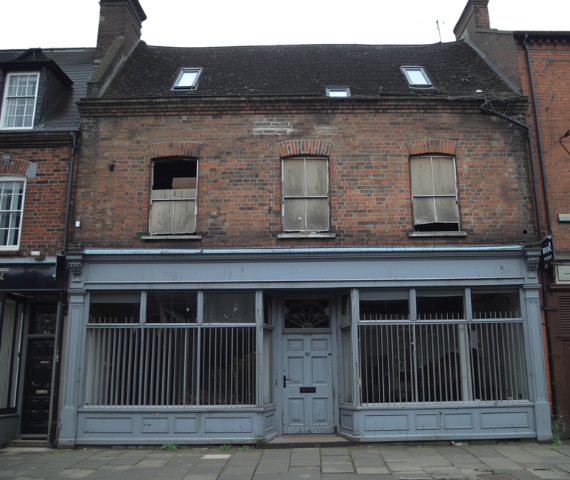
When viewing a vacant commercial property or site, few observers, including community groups and stakeholders, will know the reasons for the development’s delay. They do not see the planning conditions, funding decisions, lease negotiations, procurement issues, construction phasing, or internal project timelines. They see empty buildings, inactivity, dark windows, closed doors, hoardings, and no obvious sign of progress. Their frustrations are not always helpful, but they are, at least, understandable.
Outside impressions matter. Even when a delay is reasonable, temporary, or unavoidable, public perception can quickly turn into believing a project has failed or been forgotten. For developers, councils, landlords, and regeneration teams, this can affect trust, local confidence and levels of engagement throughout the surrounding area.
This is where temporary occupation for stalled sites can play a practical role. It does not pretend that the long-term scheme is ready or even, necessarily, that everything is running to plan. It does not replace the need for proper development progress. However, it can change what people see and how they experience the site should things falter. This is why the team at ASTOP has written this quick guide to short-term occupation for delayed developments.
How To Manage Stalled Development Site Perception
Perception matters when inactivity becomes a headline in itself. A project may be paused for legitimate reasons, but a visible delay will still prompt questions. Is all well? Is the development on track? Is the site still active? Is it cared for? Is it contributing anything? Is it draining resources? Does it still feel like part of our community’s future? If the answer to any of these questions is no, or even simply appears to be no, confidence in developers can start to weaken, and relationships can become strained. This means investing time and effort in improving perceptions of delayed sites is not just sensible, it can prove vital.
Empty or inactive buildings can make an area feel less safe, less cared for, and less commercially confident. For local councils and public sector bodies in particular, the impact of property vacancies can create pressure even when the asset itself is privately owned.
This is why, at ASTOP, we work hard with our clients to not only create a structured approach to temporary use for empty development buildings, but also to support the communication strategies that align with it.
What Makes A Site Feel Stalled To The Outside World
Stalled sites are not judged only by formal progress. They are judged by everyday signals. A site with no movement, no lighting, and no active use, for example, quickly starts to look forgotten.
Limited Visible Activity
Stakeholders can quickly get the impression that work has stopped, even if a lot is happening behind the scenes. This is because planning discussions, funding conversations, legal agreements, and revised programmes are largely invisible to the public. From the street, the site will simply look empty, no matter how much back-office energy is being spent on a project. That absence of visible activity on stalled sites feeds assumptions, speculation, and rumour. If people assume nothing is happening, it is human nature to conclude that the project has lost momentum, or, worse, that the owner has stepped away from their responsibilities. Once that impression forms, it can be difficult to shift. One of the key benefits of short-term occupation for delayed developments is simply visibility.
Signs Of Deterioration
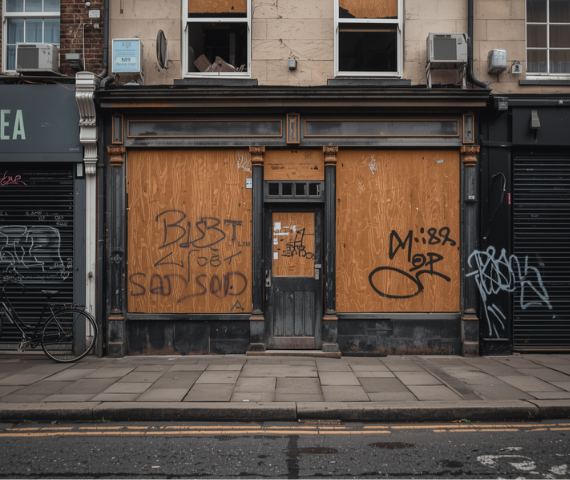
Damage, graffiti, fly-tipping, and similar signs of neglect all send a message. They may not reflect the site’s long-term potential, but, even if they appear briefly, they can shape how influential people think and talk about your property. Perception is often cumulative. One issue may not matter much on its own, but a series of visible problems can create the sense that the building is unmanaged. That can then affect local trust, stakeholder confidence, and others’ willingness to support the next phase.
Poor Relationship With The Surrounding Area
If there is an effort to economically regenerate a community underway, a dormant building can be particularly problematic. Empty, unloved, vacant property may very well interrupt footfall in a retail space or weaken neighbourhood cohesion in a residential area. A lack of care, even if it is solely a perceived one that doesn’t represent the reality of a situation, can be damaging to the relationship between a developer and local community groups.
However, a site does not need to be in permanent use to make a positive contribution and challenge this perception. ‘Meanwhile use’ for stalled development sites can be a useful tool for developers who still need to make a contribution to ethical property regeneration despite project delays and schedule deviations.
Gaps Between Promise And Delivery
Problems for developers arise when the gap between what you have promised and what you are perceived to have delivered becomes too wide. Most projects are announced with ambition, quite rightly. They may have featured in consultation, local press and public meetings. When visible progress slows or stops, however, people naturally start asking questions, and uncertainty quickly evolves into hesitancy and even hostility.
Improving perceptions of delayed sites often means reminding observers that the project is still underway. With this in mind, temporary occupation for stalled sites goes some way to reassuring local residents and stakeholders. It demonstrates that the building is still safe and well-maintained. Interim use for delayed sites goes a long way to allaying local fears and concerns.
How Temporary Occupation Changes The Story
Temporary occupation and interim use for delayed sites improve perception because of a key central point: they change what people see and experience of a building. Instead of vacancy, there is managed use. Instead of a lack of management, there is a visible purpose. Instead of a building sitting silently, there will be activity, noise, action, and positivity. Temporary use for empty development buildings, in itself, brings a wealth of benefits.
Daily Signs Of Life
‘Meanwhile use’ for stalled development sites gives a site movement. Small signals, such as staff arriving in the morning, volunteers using the space, deliveries being received, and a normal routine, can add up to have a big impact. People tend to respond differently to a building that appears to be used. It feels less static and less forgotten. There is a stronger sense that someone is responsible for it and that the site remains relevant. Even if the long-term development process is stalled, there is no need for it to appear unloved or forgotten. Improving perceptions of delayed sites can be as simple as making a daily effort to keep the building in question active.
Active Management
Occupiers, even temporary ones, notice security and maintenance issues. This does not necessarily replace professional property management, but it can help prevent a dormant building from being damaged or degraded through a lack of active care. Interim use for delayed sites becomes important because perception is closely tied to ownership and responsibility. A commercial property that appears to be neglected can quickly become a reputational problem for developers. One in use, less so.
Why This Matters For Councils And Local Communities
For local communities and local government alike, empty property issues usually feel immediate. People want places to feel safe, active, and cared for. They want regeneration promises to feel real. They want empty buildings to be used where possible, particularly when local organisations are struggling to find affordable space.
This is why community use for paused development sites is often effective when the fit is right. For councils operating under budget pressure as well, reducing vacancy without capital spend is also an important part of the picture. Temporary occupation can help create visible social value through property that doesn’t require commitment to a major building programme.
Why Temporary Occupation Helps Developers
Short-term occupation of delayed developments helps developers bridge gaps between project phases more constructively than leaving a property empty. It can show that the site is still being actively considered, even when the permanent scheme is not yet ready to move forward. The benefits are often reputational, but this leads indirectly to positive practical and commercial outcomes, too.
Temporary occupation supports improved local sentiment, creating a stronger relationship with councils and other regional stakeholders in particular. A site that remains visibly useful during a delay is less likely to be seen as a problem by those with responsibility for places and spaces. Stalled projects become easier to portray as projects being actively managed through transition rather than projects being put on the back burner and deprioritised.
Temporary Occupation Reduces The Risks That Shape Perception
Damage, trespass, fly-tipping, and vandalism in empty properties can all lead to visible deterioration and reinforce the idea that a site is unmanaged and being left to degenerate and decay. Once these problems become associated with a building, they can also change how people feel about the wider area. Once a place has a poor reputation, problems become cumulative. Day-to-day security risks for empty buildings, for example, are closely connected to reputation. A property that attracts repeated problems can quickly become a local concern, even if the long-term development plans remain sound.
Temporary occupation, interim ‘meanwhile use’, and charity leasing reduce security risks. Regular use, presence, and oversight all create a sense that the property is a valuable asset worth protecting and not necessarily an easy target for those intent on committing crime or anti-social behaviour.
Why Temporary Occupation Is About More Than Optics
Although we’ve talked a lot about perception in this blog, temporary occupation is not just about managing the optics of a stalled site. The aim is not just to mask delay or create a superficial impression of progress. Try this, and you’ll quickly be seen through by parties committed to real progress. The real value in arranging for temporary interim use of a building is in making the site genuinely useful. Should a suitable charity, social enterprise, or community organisation use a space responsibly, a building that would otherwise be empty can be used to deliver community services, provide space for community activities and training, and offer office space to charities, workspaces for community groups and warehousing for good causes. All these mean a building no longer feels dormant. The shift can be simple but powerful, and, importantly, deliver real ROI that often aligns with stakeholder social value reporting requirements.
Where ASTOP Fits In
As a charity property consultancy, ASTOP specialises in arranging temporary occupation suitable for empty, paused, or delayed building projects. We work with both parties: the developer seeking an interim solution and the charity, community group, or good cause seeking a home. It’s a genuine win-win scenario for everyone involved.
Our work often starts with a practical assessment of the opportunity. Is the building safe and usable? What kind of interim use could fit? What risks need to be managed? What would help improve perception without creating problems when development resumes? The answer is almost always visible activity on stalled sites. We can help make that happen.
Why do developers use ASTOP? We are adept at sourcing suitable, pre-vetted temporary occupiers, structuring appropriate arrangements, and supporting a managed approach to interim solutions. The regeneration benefits of temporary occupation are never far from our minds, either. We have a long list of case studies and significant relevant experience to share.
If a delayed or stalled site is becoming harder to defend, contact ASTOP’s director, Shaylesh Patel and the team. We can help assess whether temporary occupation could improve perception, support site management, and create meaningful interim value.

